
We accept
Bitcoin.
Get 10% Off Any Service Package When Paying in Bitcoin
// 10% Discount
Thermodynamic solutions
deserve thermodynamic money.
We accept Bitcoin.
// discount = 10% on total bill
// rail = on-chain · BTCPay
At ETD we believe Bitcoin is the future of global value transfer: permissionless, trustless, cross-border, final settlement… all within a few hours. That is why we offer a 10% discount on any service package when you choose to pay in Bitcoin.
// Payment Process
From quote to on-chain receipt.
What is ETD's Bitcoin Payment Process? Three steps. Quote, the BTCPay request, and the on-chain settlement.
Locate the link
Locate the link to the appropriate payment request within your quote. Copy and paste the link into your internet browser. It will take you to a personalized BTCPay request form.
Open the invoice
Double check the payment details displayed on the payment request. If satisfied click the “Pay Invoice” button in the upper right corner of the page. This button will take you to the invoice.
Settle on-chain
Complete the invoice using your bitcoin wallet of choice by either scanning the QR code or copying and pasting the address text. After the payment has settled you will receive a confirmation with the option to view your receipt. Please note that when paying on-chain the confirmation can take up to an hour.
// On-chain confirmation can take up to an hour; lightning / off-chain methods may settle sooner when available.
// Why Bitcoin
Thermodynamically sound money.
The Discovery of Digital Scarcity
In 2009 Satoshi Nakamoto released Bitcoin, an open source, peer to peer payment protocol. It combines a chain of digital signatures, a time stamp server, and proof-of-work consensus to create an immutable online ledger, that anyone can access but no one can control. This genius design simultaneously solves both the Byzantine Generals Problem and the Double Spend Problem, two road blocks that prevented the rise of decentralized electronic cash for decades. Satoshi equipped the protocol with a monetary issuance schedule, where there will only ever be 21 million bitcoin in existence. Hence, with the successful launch of Bitcoin in 2009 the world was exposed to the first ever instance of absolute, digital scarcity.
Thermodynamically Sound Money
Every system throughout the natural world must adhere to the laws of thermodynamics. Money is no exception. The underlying, base function of money is to act as a system of value exchange, or put another way — a system of energy exchange. Units of money are representations or placeholders that can be exchanged for energy intensive goods and services. Although the money itself does not have any physical utility, those who use a reliable money can rest assured that they will be able to exchange it for real-world value in the future.
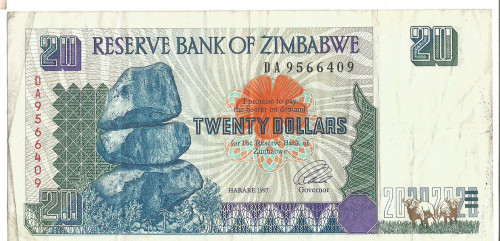
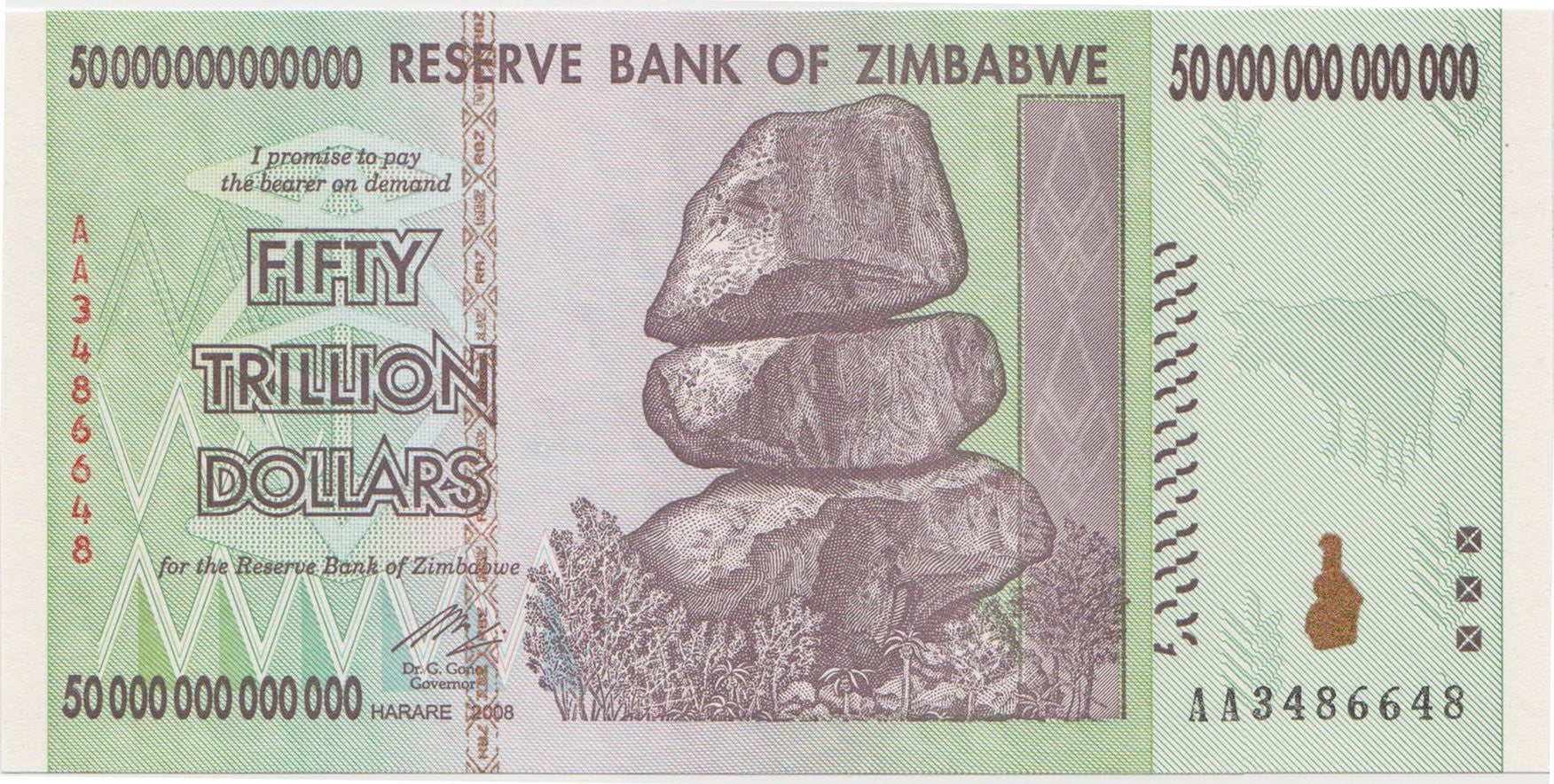
Before 2009, every form of money known to man had a subtle, yet fatal flaw. They all leaked energy, through a process called inflation. Monetary inflation is simply when additional units of money are inserted into a monetary system. Some instances of inflation, such as the banknotes of Zimbabwe, reveal just how fast a leak can turn into the whole dam breaking. The people of Zimbabwe saw their paper wealth lose over 99.999% of its value in less than a decade. While other systems, such as gold, have been held in check — with an average inflation rate of ~2% over the past century. But what exactly causes some forms of money to leak value faster than others?
When taking a look at the history of money, it is fair to say gold has been the most reliable for mankind over the millennia, especially in terms of a store of value. But why gold? What about this one metal has caused it to preserve purchasing power better than other metals and especially better than paper money? The answer is somewhat unintuitive. Unlike paper money, gold has no issuer. Instead, the global supply of gold can only be expanded when new deposits are mined out of the Earth's crust. It just so happens that gold is a very unique element. It can not be reproduced in a laboratory setting, it is sufficiently scarce, evenly distributed throughout the Earth, and requires a huge amount of energy to extract meaningful quantities. These characteristics all contribute to the secret of gold's success — the inability to centrally control its supply and issuance.
Another, more technically correct way, we could describe this phenomenon of leaky money is through thermodynamics. A money is more thermodynamically sound when the cost (in joules) of inflating the supply is great enough to outweigh the benefit, and therefore deter inflation. In the world of physical goods, gold comes closest to achieving this balance. As stated above, a monetary system leaks energy when new monetary units are added to the system. It is the gold mining market, which is extremely competitive and thermodynamically intensive, that allows gold to retain a low inflation rate. This is why gold has been highly sought after, as the premier form of value-saving money… until Bitcoin.
Satoshi Nakamoto designed the monetary policy of the Bitcoin protocol to have an exponentially decaying inflation rate. The protocol is set to mine the last fractions of bitcoin in the year 2140, at which point inflation is no longer possible. Like gold, the only way to mine bitcoins is through an extremely energy intensive process. However, this type of mining does not require diesel and heavy machinery, but electricity and specialized computers. The energy intensive mining and capped 21 million supply insure that Bitcoin will continue to hold more and more of its monetary energy over the next 100+ years. Until, in 2140 the thermodynamic cost of inflating the supply of Bitcoin will arrive at its final destination — infinity.
Bitcoin is the world's first and only thermodynamically sound money.
// Issuance Curve
Bitcoin issuance and inflation rate.
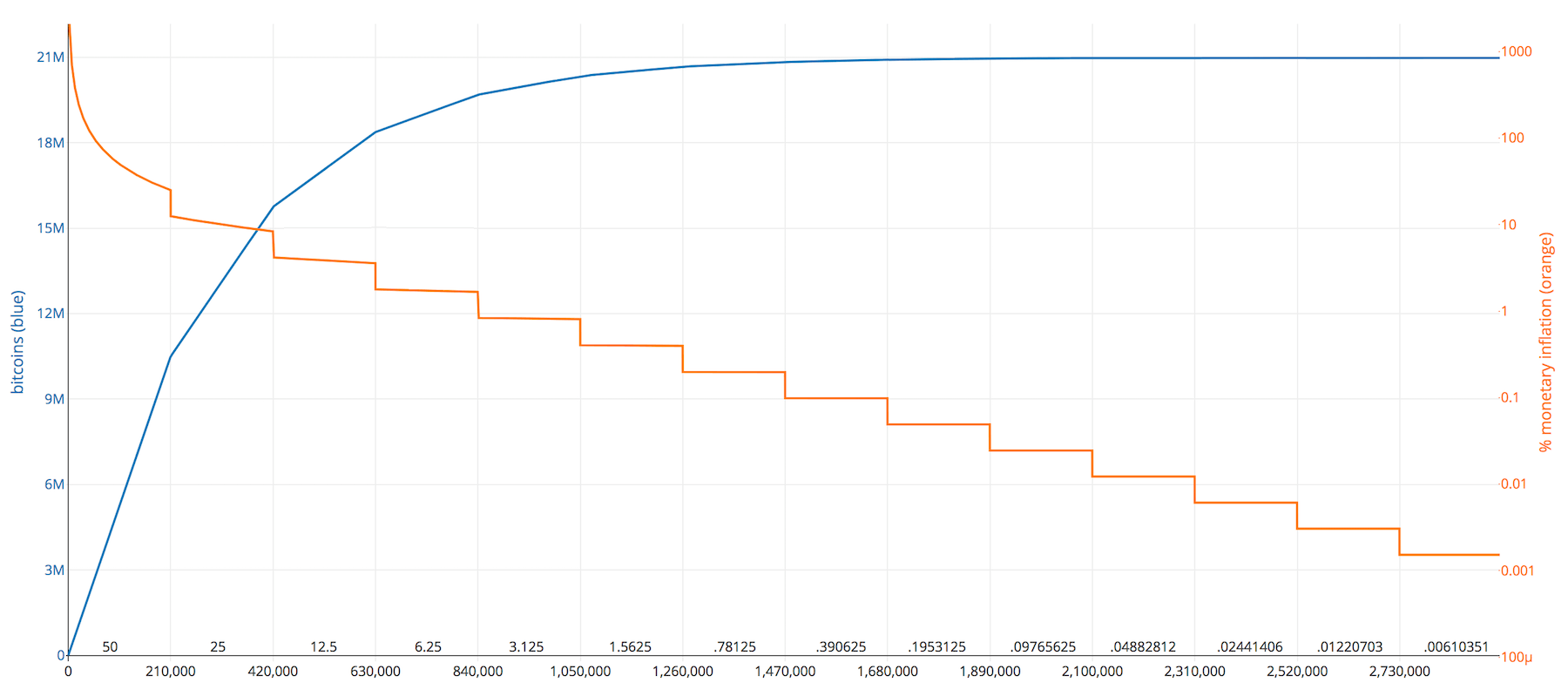
Inflation decays exponentially toward zero. By 2140, minting ends and the cost of further supply inflation is, in joules, infinite.
// Engage ETD
Pay in bitcoin.
Save ten percent.
Send us a brief — your scope, your timing — and ask for the “pay in bitcoin discount” on the quote. Permisionless, trustless, cross-border, final settlement.